

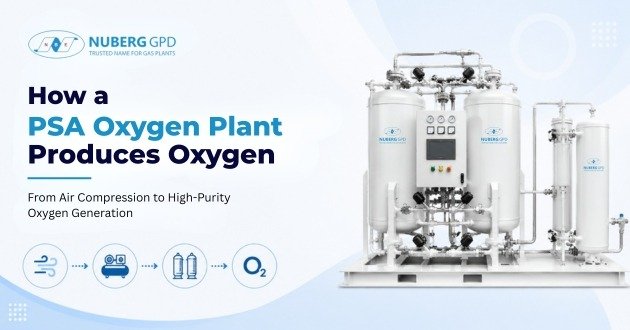
In recent years, there has been an increased reliance on the continuous and assured supply of oxygen in all areas of industrial operation and healthcare systems. Relying on conventional methods for acquiring this gas (transporting and storing high-pressure gas cylinders or…
Role of Carbon Molecular Sieve (CMS) in PSA Nitrogen Plant Performance and Purity Stability
Carbon Molecular Sieve is the core functional material inside a PSA nitrogen generator. The sieve performs the actual gas separation. The compressor, valves, and controls support the process, but CMS determines nitrogen purity, recovery rate, cycle efficiency, and long-term stability. In…
PSA Oxygen Plant Design Parameters: Purity, Recovery Rate, and Adsorbent Selection
A PSA oxygen plant generates oxygen on-site from compressed air using Pressure Swing Adsorption. The system separates nitrogen from air and delivers concentrated oxygen for industrial and medical use. Three parameters define PSA oxygen plant performance: oxygen purity, oxygen recovery rate,…
PSA vs VPSA Oxygen Plants: Design Differences and Industrial Applications
On-site oxygen generation has replaced liquid oxygen supply in many industrial facilities. Plants now produce oxygen directly from air using adsorption-based systems. Two major technologies dominate this field: Pressure Swing Adsorption and Vacuum Pressure Swing Adsorption. Both systems separate oxygen from…
Compressed Air Quality Requirements for PSA Nitrogen Plants: Filtration, Dew Point, and Pre-Treatment Design
Compressed air is the raw feedstock of every Pressure Swing Adsorption nitrogen plant. The PSA system separates nitrogen from oxygen using Carbon Molecular Sieve. The quality of compressed air directly determines nitrogen purity stability, CMS life, and plant efficiency. Poor air…
Common Failure Modes in PSA Nitrogen Plants and How Proper System Design Prevents Them
PSA nitrogen plants are reliable systems when designed and operated correctly. When failures occur, they rarely come from the PSA principle itself. They come from design shortcuts, air quality issues, and poor operating discipline. Most unexpected nitrogen purity drops and plant…
Key Design Parameters That Determine PSA Nitrogen Generator Performance and Purity Levels
A PSA nitrogen generator does not fail because of technology limitations. It fails because of incorrect design assumptions. Unstable purity, high power consumption, and early CMS failure almost always trace back to poor sizing, weak air pre-treatment, or incorrect cycle logic….
PSA Nitrogen Generation vs Liquid Nitrogen Supply: Cost, Reliability, and Operational Trade-offs
Industrial plants depend on nitrogen for inerting, blanketing, packaging, and process safety. The main sourcing decision comes down to two options. Produce nitrogen on-site using a PSA system or purchase liquid nitrogen from an external supplier. This choice affects cost, reliability,…
How PSA Nitrogen Generators Improve Process Safety in Inerting and Blanketing Applications
Industrial processes that handle flammable, reactive, or oxygen-sensitive materials face one common risk. Oxygen presence inside equipment leads to fires, explosions, oxidation, and product loss. Nitrogen inerting and blanketing exist to eliminate this risk. A PSA nitrogen generator for inerting provides…
PSA Nitrogen Plant Maintenance, Reliability, and Lifecycle Performance
PSA nitrogen plant reliability defines how consistently nitrogen generation supports production, safety, and quality objectives. Industrial buyers assess maintenance requirements and lifecycle behavior to reduce downtime risk and justify long-term investment decisions. Reliable PSA nitrogen plants operate predictably, consume stable energy,…